If you manage a medical centre in Sydney, you already know cleaning here isn’t the same job as wiping down an office kitchen. A GP(General Practitioner) clinic, dental surgery, or allied health practice deals with bodily fluids, sharps, high patient turnover, and people whose immune systems are already under stress. Get the cleaning wrong, and you’re not just risking a bad Google review; you’re risking a real infection passing from one patient to the next.
I’ve walked into practices around Sydney where the reception area looked spotless, yet nobody had wiped down the blood pressure cuff or the pen chained to the sign-in sheet in days. That’s the gap this guide closes. Below you’ll find exactly what proper medical centre cleaning covers, how often each area needs attention, and how to pick cleaners who actually understand infection control rather than just running a mop around.
Everything here follows NSW Health and RACGP guidance for practice hygiene, so you can use it as a working checklist for your own centre, whether you clean in-house or you’re comparing quotes from providers like Top Sydney Cleaners.
Medical Centre Cleaning Sydney: Why Infection Control Comes First
Infection control cleaning services exist because a medical centre carries risks a normal office never sees. Every consultation room, waiting chair and door handle is a potential touchpoint for bacteria and viruses moving between patients.
NSW Health’s own Policy Directive on cleaning healthcare environments is blunt about this: Cleaning schedules have to be based on the actual risk to patients and staff, not just a generic weekly routine. The Clinical Excellence Commission backs this up, treating environmental cleaning as one of the core pillars of infection prevention, alongside hand hygiene and correct use of PPE.
What NSW Health Actually Requires From Your Practice
NSW Health expects practices to have documented cleaning schedules, trained cleaning staff, and cleaning that’s matched to the risk level of each area. A procedure room and a staff kitchen do not get the same treatment, and inspectors know the difference.
RACGP’s Infection Prevention and Control Standards go a step further for general practices specifically, covering everything from surface cleaning to how you manage blood and body fluid spills. If your practice is going through accreditation, this document is worth reading in full, not skimming.
Why Regular Office Cleaning Falls Short
A standard office cleaner is trained to make a space look tidy. A medical centre needs a space that’s actually decontaminated, and those are two different skill sets entirely.
Regular cleaning products often aren’t strong enough to deal with the pathogens found in a clinical setting, and general cleaners aren’t trained to spot high-risk zones like sharps bins, treatment tables, or areas exposed to bodily fluids. This is exactly why our office cleaning guide covers a different checklist from this one; general offices simply don’t carry the same risk profile.
Medical Centre Cleaning Checklist: What a Proper Clean Covers
A medical centre cleaning checklist should never be one size fits all. Different zones in your practice carry different risks, so they need different products, tools and frequencies.
Here’s a breakdown that reflects what NSW Health and RACGP guidance actually calls for:
| Area | Task | Suggested Frequency |
| Waiting room and reception | Disinfect chairs, counters, EFTPOS machine, door handles | Daily, more during flu season |
| Consultation and treatment rooms | Wipe down examination tables, equipment, light switches | Between patients and end of day |
| Toilets and staff areas | Full disinfection of surfaces, taps, and bins | Daily |
| Floors | Neutral detergent mop in general areas | Daily |
| Sharps and clinical waste | Colour-coded bin management, no manual handling | As needed, per bin fill level |
Waiting Room and Reception Area
Your waiting room sees more foot traffic than any other part of the building, and it’s often the most neglected. Chairs, the reception counter, pens, and the card machine get touched by dozens of people a day, sick and well alike.
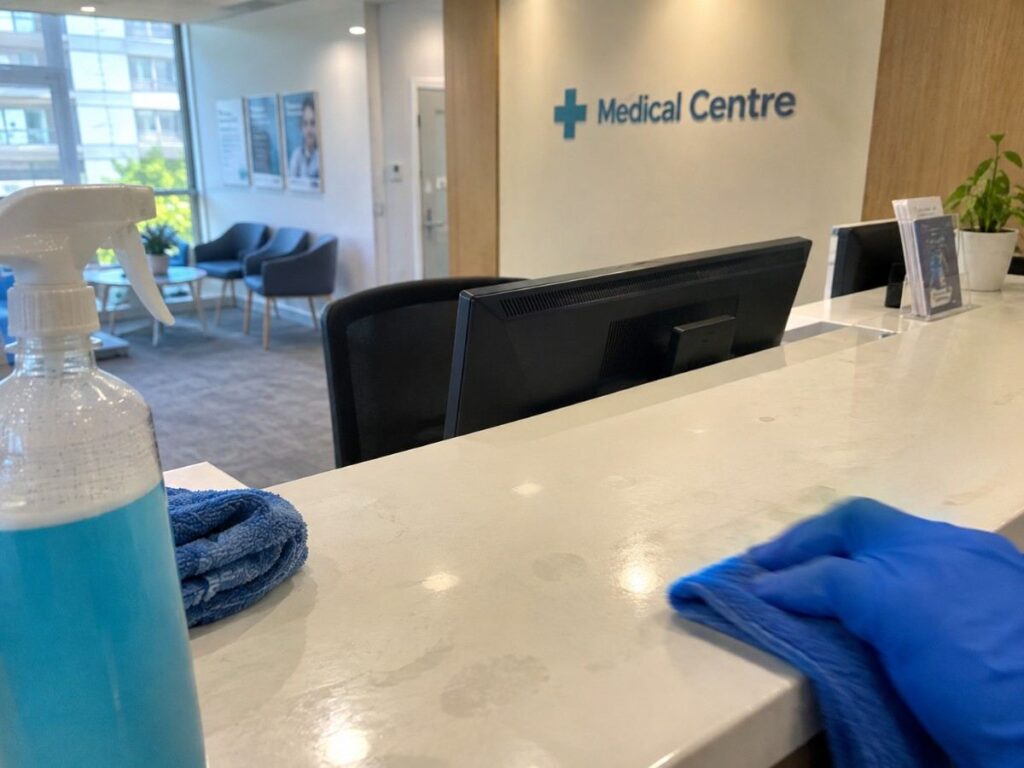
A proper clean here means disinfecting every high-touch surface daily, not just vacuuming the carpet and calling it done. During cold and flu season, this frequency should go up, not stay flat.
Consultation and Treatment Rooms
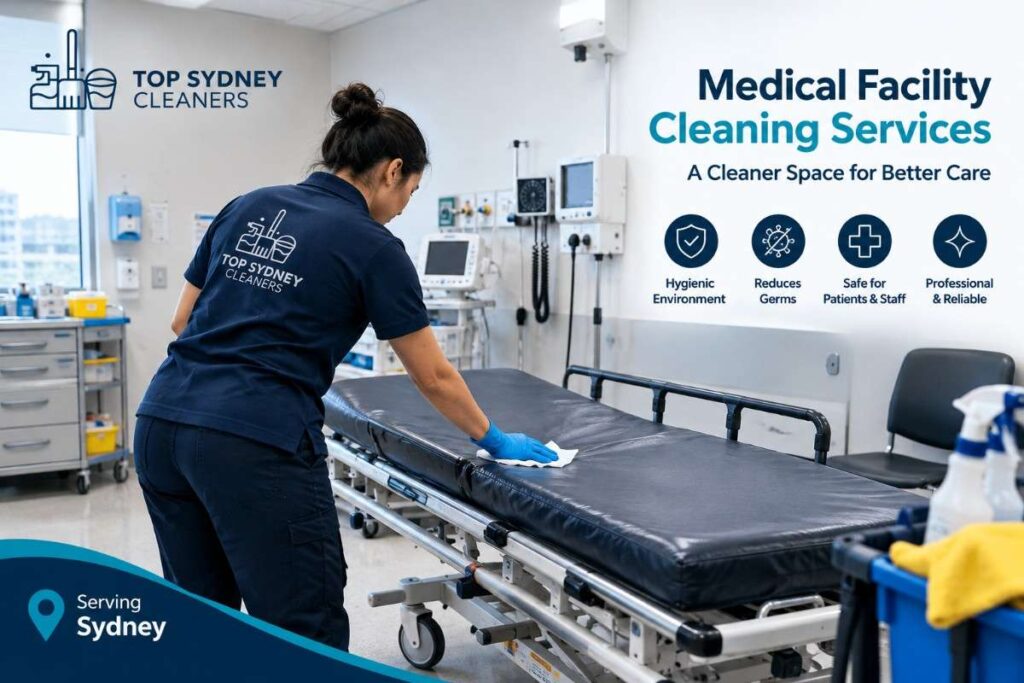
These rooms carry the highest infection risk in your entire practice. Examination tables, blood pressure cuffs, stethoscopes, and light switches all need wiping down between patients, using disinfectants that are actually registered for medical use.
At the end of each day, these rooms should get a full disinfection pass, not just a quick tidy. This is where most DIY(Do It Yourself) cleaning routines fall apart, because staff are busy seeing patients and cleaning gets rushed. Our services go into more depth on what a full end-of-day disinfection pass should include.
Hospital Grade Cleaning Services vs Medical Commercial Cleaning: What’s the Difference
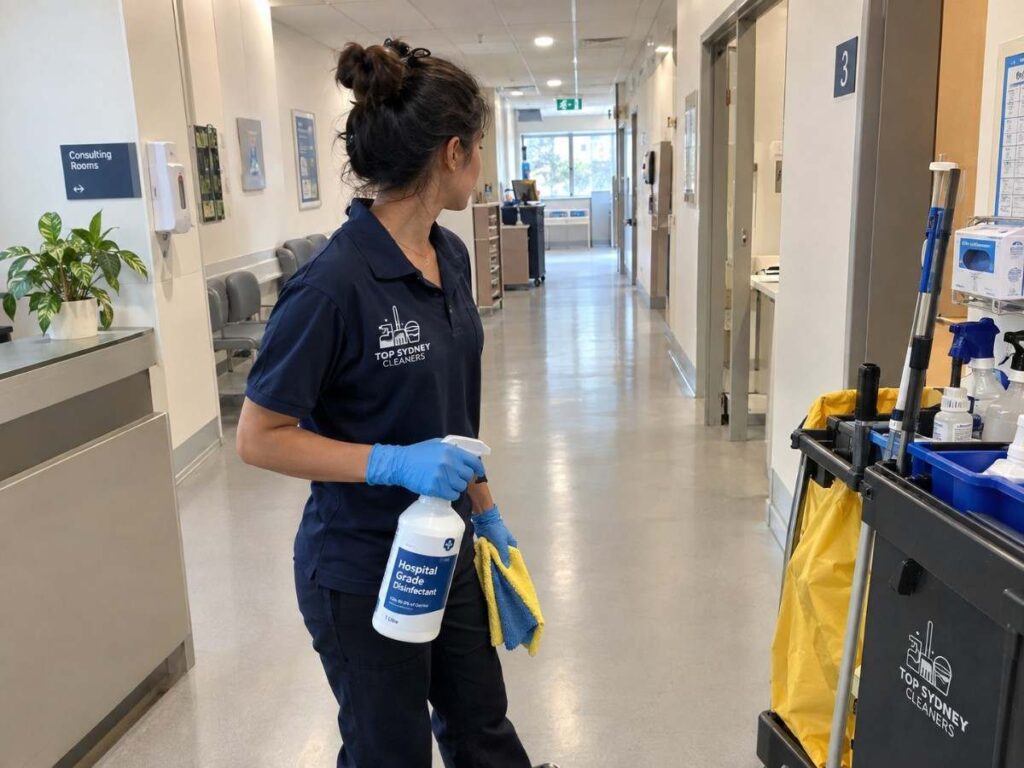
Hospital-grade cleaning services use disinfectants that meet a specific efficacy standard against bacteria, viruses, and fungi, registered through the Therapeutic Goods Administration. Medical commercial cleaning is a broader term that can mean anything from full hospital-grade protocols down to a slightly upgraded office clean, so it pays to ask exactly what a provider means before you sign anything.
Genuine hospital cleaning companies use colour-coded equipment, so a cloth used in a toilet never ends up in a consultation room. They also train staff specifically on clinical waste handling, spill response and cross-contamination risks, which is a very different skill set from general commercial cleaning.
⚠️Warning: If a provider can’t tell you which disinfectants they use or show you a documented cleaning schedule, that’s a fair warning sign they’re not set up for healthcare work.
How to Choose Medical Centre Cleaners in Sydney
Not every medical office cleaning company that says “healthcare experience” on their website actually has it. Here’s what’s worth asking before you commit to any medical cleaning services in Sydney, or before you get a quote from us.
- Do they use TGA-registered, hospital-grade disinfectants
- Can they show a documented, risk-based cleaning schedule
- Are staff trained in sharps handling and clinical waste
- Do they use colour-coded equipment to prevent cross-contamination
- Can they provide references from other Sydney clinics or medical centres
If your building also houses a childcare centre or allied health tenants, it’s worth checking whether the same provider also offers childcare cleaning, since shared common areas often need coordinated cleaning schedules between tenants.
How Often Should a Medical Centre Be Cleaned in Sydney?
There’s no single answer here; it genuinely depends on patient volume and the type of practice you run. A busy GP(General Practitioner) clinic in the CBD needs a different frequency than a small allied health practice in the suburbs.
| Practice Type | Recommended Cleaning Frequency |
| High volume GP clinic | Daily, with between patient wipe downs |
| Dental surgery | Daily, plus sterilisation of instruments per session |
| Allied health / specialist clinic | Daily to alternate days, based on patient contact level |
| After hours medical centre | Daily, ideally overnight |
Conclusion
A medical centre that looks spotless isn’t automatically a safe one. Real infection control comes down to the right products, the right training and a schedule that matches the actual risk in each room, not a generic weekly clean copied from an office contract.
If you’re reviewing your current cleaning setup, start with the checklist above and compare it honestly against what’s actually happening in your practice today. It’s a fairly quick way to spot the gaps before a patient, or an accreditation inspector, spots them for you. Get in touch with Top Sydney Cleaners if you’d rather have that checked properly than guess.
Frequently Asked Questions
Is medical centre cleaning different to office cleaning?
Yes. Medical cleaning follows infection control standards set by NSW Health and RACGP, using hospital-grade disinfectants and risk-based schedules, while office cleaning is mostly about appearance and general hygiene.
Do medical centres need cleaning between every patient?
High-contact areas like examination tables and shared equipment should be wiped down between patients, though a full room disinfection typically happens at the end of the day.
What products should medical centre cleaners use?
Look for TGA-registered disinfectants that state efficacy against bacteria and viruses, not general-purpose household cleaning products.
Can the same cleaning company handle a medical centre and a childcare centre in the same building?
Yes, provided they run separate colour-coded equipment and cleaning protocols for each space, so there’s no cross-contamination between the two.
How do I know if my current cleaner is doing enough?
Ask for a written cleaning schedule and compare it against NSW Health’s Policy Directive on cleaning healthcare environments. If they can’t produce one, that’s your answer.